
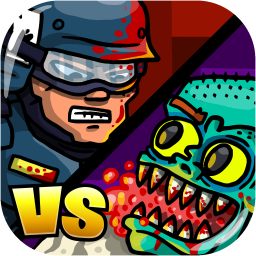
SWAT vs Zombies
About SWAT vs Zombies
SWAT vs Zombies gets tense fastest when the screen looks under control: one officer, a clear street, a few slow walkers drifting in from the right. Then a heavier zombie soaks up half a magazine, a crawler slips under your aim, and suddenly you are backing up while trying not to reload at the worst possible second.
Holding the line, one magazine at a time
This is a straightforward side-view action game about surviving zombie waves with a SWAT officer and whatever firepower you can afford between rounds. Moment to moment, you are aiming with the mouse, firing into the crowd, stepping to create space, and watching your reload timing. The basic rhythm is simple: thin out the quick enemies before they reach you, dump damage into the tougher ones, grab a breather, then spend your earnings on upgrades before the next wave gets nastier.
The controls feel best when you treat movement as small corrections rather than constant running. If you retreat too early, you give up useful screen space. If you stand still too long, the front zombie blocks your shots while the rest bunch up behind it. The sweet spot is keeping the mob in a neat line, picking targets, and reloading while there is still a little distance left.
What I like about SWAT vs Zombies is that it does not overcomplicate the loop. You are not solving a puzzle or managing a giant base; you are making quick decisions under pressure. Do you finish the nearly dead zombie at the front, or switch to the faster one closing in behind it? Do you reload now, or squeeze out the last few bullets and risk getting caught empty? Those tiny choices are where most runs are won or lost.
Small habits that keep you alive longer
- Reload before you are desperate. The worst reload is the one you start when a zombie is already swinging at you. If the lane is clear enough, reload early and enter the next push with a full magazine.
- Prioritize speed over size when enemies stack up. Big zombies are scary, but fast ones are the ones that ruin your spacing. Drop runners and crawlers first, then pour damage into the tanky bodies.
- Upgrade damage before buying every option. A new weapon is fun, but a weak gun that needs too many shots will get you overwhelmed. Stronger basic damage makes every wave cleaner and gives you more time to react.
Also, do not fire wildly into empty space. The game rewards steady aim more than panic clicking. When zombies overlap, aim into the densest part of the group and let your shots do work before the line spreads out.
Why the next wave is hard to ignore
The difficulty curve is built around escalation rather than surprise. Early waves let you learn the range, reload speed, and enemy movement. After that, the game starts mixing bodies in a way that forces better target order. A slow bulky zombie at the front can soak shots while smaller enemies close in behind it, and that is when sloppy shooting starts to matter.
Between rounds, the upgrade screen gives the game its pull. Even a rough wave usually earns enough to make one useful improvement, and that creates the classic “one more try” feeling: if you can just survive long enough to afford the next weapon or stat boost, the next attempt might open up. It is not a deep progression system, but it is enough to make each run feel slightly more prepared than the last.
SWAT vs Zombies works best as a compact survival shooter. It is easy to understand, but it still punishes bad timing. If you enjoy games where the main skill is staying calm while a crowd inches closer, this one has a satisfying little pressure loop.
How to Play SWAT vs Zombies
Move your SWAT officer with A/D or the arrow keys, then aim with the mouse and click to shoot. Press R to reload before zombies get too close. Use number keys or the weapon buttons to switch weapons when you have unlocked them. Survive each wave, earn money, and spend it on stronger guns or upgrades so the zombies do not break through.