
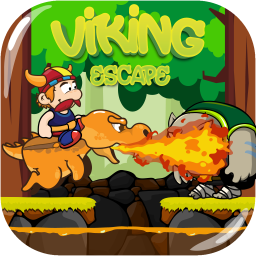
Escape
About Escape
Escape gets tense in the tiny half-second between seeing a gap and deciding whether you can actually fit through it. It is a simple action game on the surface: keep moving, avoid the things that stop you, and last long enough to push a little farther than your previous run. The trick is that the game punishes sloppy steering more than slow reactions. If you try to wrestle the controls, you usually make the danger worse.
Small movements beat heroic dodges
The best advice for Escape is to stop making huge corrections. Short taps are much safer than holding a direction until your character slides across half the screen. Most failed runs come from overcommitting, then having no room left to fix the next obstacle. Try to keep your movement boring. Nudge into position early, then let the gap come to you.
It also helps to think one obstacle ahead. Do not stare at the edge closest to your character. Watch the next opening, especially when the pace starts to climb. If you enter a gap from the wrong angle, the following gap becomes much harder, so the cleanest path is often the one that sets up the next move rather than the one that looks safest right now.
- Stay near the middle when you can. It gives you more choices when the next pattern appears.
- Use quick taps instead of long holds. Big swings feel dramatic, but they make recovery almost impossible.
- Skip risky openings. A narrow save is satisfying, but a wider route that keeps you alive is usually the better play.
The best moments are the ones you barely survive
What makes Escape satisfying is how readable it is. When you mess up, you usually know exactly why: you moved too late, drifted into a wall, or tried to squeeze through a gap that was never really there. That makes the next run tempting, because the fix feels obvious. You do not need a complicated plan. You need a cleaner hand.
There is a good little rhythm to the game once you settle down. You start recognizing when an obstacle pattern is asking for patience rather than speed. Sliding through a tight space without scraping the edge feels great, especially when you have already survived long enough for the game to speed up. Those moments are small, but they are the reason Escape works. It is not about flashy effects; it is about the relief of threading the needle.
Mistakes new players make in the first minute
The biggest beginner mistake is chasing every safe-looking gap immediately. New players often move as soon as they see space, then discover they have drifted into a worse lane. Wait a fraction longer and choose the path that leaves you room afterward. Escape rewards control more than bravery.
Another common mistake is hugging a wall or corner after a close call. It feels safe because one side is protected, but it cuts your escape options in half. If you survive a messy dodge, your first job should be getting back to a flexible position, not celebrating the save.
Finally, do not restart mentally after one bad move. A wobbly run can still go far if you calm down quickly. When you clip into a bad angle or get forced wide, make the smallest correction possible and rebuild your position. Panic movements usually cause the crash, not the original mistake.
How to Play Escape
Use the Arrow keys or WASD to move your character. Dodge the walls and obstacles while staying in play as long as possible. Look ahead for the next opening and use small movements to line up safely.