
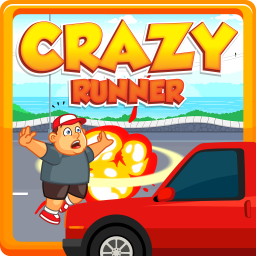
Crazy Runner
About Crazy Runner
Crazy Runner gets tense in that awkward half-second after you spot an obstacle and realize your thumb already committed to the wrong move. It looks like a simple arcade runner at first, but the game is really about staying calm when the screen starts feeding you hazards faster than your brain wants to process them.
Stop jumping at everything
The biggest beginner mistake is treating every problem like it needs a jump. In Crazy Runner, that works for the first few seconds and then starts getting you flattened, clipped, or dropped into trouble. Some obstacles are better handled by sliding, changing position early, or simply waiting a beat before moving. If you are constantly correcting yourself at the last moment, you are probably watching your character instead of the track ahead.
A better habit is to keep your eyes slightly in front of the runner. Look for patterns: a low barrier after a gap, a raised obstacle followed by another jump, or a coin trail that hints at the safe route. Coins are tempting, but they are not worth taking if they drag you into a bad line. In this game, a clean run usually beats a greedy one.
- Do not spam inputs: extra jumps or late swipes often cause the crash, not the obstacle.
- Use coins as clues, not orders: follow them when the path is safe, ignore them when it looks messy.
- Recover first: after a close call, focus on surviving the next obstacle before chasing score.
The run gets faster before it gets harder
Crazy Runner has that classic arcade difficulty curve where the rules stay simple while the timing window shrinks. Early runs are forgiving enough to learn the basic rhythm. Then the pace picks up, obstacles appear closer together, and the game starts mixing hazards in ways that punish lazy reactions. It is not complicated, but it does demand attention.
What keeps another attempt from feeling pointless is how quickly a run restarts in your head. You rarely think, “I had no chance.” More often it is, “I jumped too early,” or “I should have stayed on that side.” That makes the next run feel like a fixable problem. The best sessions are the ones where you slowly stop reacting to single obstacles and start reading small sequences.
Closer to old-school runners than flashy endless games
Crazy Runner borrows from the same family as classic side-scrolling and endless arcade runners: keep moving, avoid the obstacle, push your score a little further. It does not bury the idea under upgrades or complicated menus. The appeal is closer to those older games where one mistake ends the run and the fun comes from tightening your timing.
Compared with more modern runner games that lean heavily on power-ups or spectacle, Crazy Runner feels more stripped down. That is a strength if you like skill-based restarts and quick improvement. It stands out because it does not ask you to manage much besides movement, spacing, and nerve. When you crash, the lesson is usually clear, which makes it easy to hit restart and try to prove you learned it.
How to Play Crazy Runner
Use the arrow keys or WASD to move, jump, and slide past obstacles. Keep the runner alive for as long as possible while collecting safe coins along the route. Watch the path ahead, time your moves early, and avoid chasing coins that pull you into danger.