
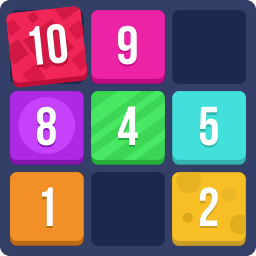
10 Ten!
About 10 Ten!
10 Ten! turns a small board of number tiles into a planning challenge. Sliding in one direction moves the board together, so a useful merge on one side can also change the arrangement on the other. Bring equal tiles together to build higher values while keeping enough space to continue.
Try to keep your larger tiles grouped in a consistent area. Before each swipe, look for a follow-up merge instead of taking the first available match. A clear route for small tiles is often more useful than a crowded corner containing one impressive number.
Read the board as connected lanes
The useful unit of planning is a row or column, rather than an individual square. Two equal numbers can look close together but still be separated by a different tile that prevents contact. Before choosing a direction, trace which tile will stop first and which one will follow it. This helps distinguish a move that actually creates a merge from one that merely rearranges the same problem. Leave access to your larger tiles instead of surrounding them with numbers that cannot yet combine with them.
Choose a move with a second step in mind
Consider a board where a small pair can merge horizontally, but doing so would split another pair into different rows. Compare that result with a vertical move that first brings the second pair into alignment. You are not trying to predict every future tile; you are checking whether the next position has a useful continuation. When two moves offer similar immediate progress, prefer the one that keeps more lanes open. Space gives you options when the next small tile appears in an inconvenient position.
Recover without breaking your whole arrangement
Repeatedly swiping in opposite directions often moves the same problem back and forth. Stop and identify the tile that is blocking the next combination. Work toward moving that obstruction while preserving the rest of your arrangement. Keeping high values near one side can help you read the board, but treat that as a planning aid rather than a rule that must never be broken. A necessary move that opens several cells can be better than protecting a corner until the board fills completely.
How to Play 10 Ten!
1. Swipe across the board on a touchscreen, or use the arrow keys on a keyboard. 2. Move tiles with the same value together to merge them. 3. Check how the whole board will shift before choosing your next direction. 4. Keep creating space and higher tiles until no useful moves remain.